| [Index] |
| Thomas Wentworth Spencer WILLS (1835 - 1880) |
| Australian Rules player, cricketer, cricket coach |
| Children | Self + Spouses | Parents | Grandparents | Greatgrandparents |
| Thomas Wentworth Spencer WILLS (1835 - 1880) + Sarah Teresa BARBER |
Horatio Spencer Howe WILLS (1811 - 1861) | Edward Spencer WILLS (1778 - 1811) | Edward WILLS (1741 - 1814) | |
| Elizabeth (WILLS) (1739 - 1822) | ||||
| Sarah HARDING (1776 - 1823) | Thomas HARDING | |||
| Sarah Elizabeth (HARDING) | ||||
| Elizabeth WYRE MCGUIRE (1817 - 1907) | Michael WYRE MCGUIRE | |||
| Jane WALLACE | ||||
|


|
|
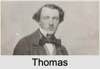
Pic P1. There are new suggestions that Tom Wills took part in the mass murder of Aboriginal people.(Tom Wills c. 1857 or c. 1864 (printed c. 1905-1910) by an unknown artist. National Portrait Gallery, Australia/Gift of T S Wills Cooke 2014. Donated through the Australian Government's Cultural Gifts Program.) Pic 1. There are new suggestions that Tom Wills took part in the mass murder of Aboriginal people.(Tom Wills c. 1857 or c. 1864 (printed c. 1905-1910) by an unknown artist. National Portrait Gallery, Australia/Gift of T S Wills Cooke 2014. Donated through the Australian Government's Cultural Gifts Program.) Pic 3. "The Wills Tragedy": A painting depicting the arrival of neighbouring men collecting and burying the dead, after the attack on Cullin-la-ringo.(8085 T.G. Moyle Wills Tragedy painting ca 1866. John Oxley Library, State Library of Queensland) Pic 4. Wills is credited as being one of Australia's great cricketers and the founder of Australian Rules football.(Thomas Wentworth Wills c. 1859 by an unknown artist. National Portrait Gallery, Australia/Gift of T S Wills Cooke 2014. Donated through the Australian Government's Cultural Gifts Program.) Pic 5. A photographic portrait of Wills later in life. The famous sportsman experienced alcohol withdrawal before his suicide at 44, in 1880.(Supplied: Wills Family Archive/Bradman Museum Collection) Pic 6. Many experts previously believed that Wills's leadership of the 1866 Aboriginal cricket team, gathered in this photograph at the MCG, was a sign that he bore no grudge against Aboriginal people for the death of his father Horatio.(Supplied: Bradman Museum Collection) Pic 7. Two years after Wills led them, the Aboriginal team would become the first Australian cricket team to tour England.(Supplied: Bradman Museum Collection) Pic 8. A bronze statue outside the MCG depicts Wills (middle) umpiring one of the earliest games of Australian Rules football in 1858, played between Melbourne Grammar School and Scotch College in the nearby Yarra Park.(Wikimedia Commons) Pic 9. TW Wills, by William Handcock, 1870.(Courtesy of the MCC Museum collection (M6576).) Pic 10. A commemorative plaque for Tom Wills, in his hometown of Moyston. |
| b. 19 Aug 1835 at Molonglo Plains, New South Wales, Australia |
| +. Sarah Teresa BARBER |
| d. 02 May 1880 at Heidelberg, Victoria, Australia aged 44 |
| Cause of Death: |
| suicide - stabbed himself with siccors |
| Near Relatives of Thomas Wentworth Spencer WILLS (1835 - 1880) | ||||||
| Relationship | Person | Born | Birth Place | Died | Death Place | Age |
| Grandfather | Edward Spencer WILLS | 13 Aug 1778 | Middlesex, England | 14 May 1811 | Sydney, New South Wales, Australia | 32 |
| Grandmother | Sarah HARDING | 01 Aug 1776 | Middlesex, England | 08 Jul 1823 | Sydney, New South Wales, Australia | 46 |
| Grandfather | Michael WYRE MCGUIRE | |||||
| Grandmother | Jane WALLACE | |||||
| Father | Horatio Spencer Howe WILLS | 05 Oct 1811 | Sydney, New South Wales, Australia | 17 Oct 1861 | Emerald, Queensland, Australia | 50 |
| Mother | Elizabeth WYRE MCGUIRE | abt 1817 | New South Wales, Australia | 28 Dec 1907 | Kew, Victoria, Australia | 90 |
| Self | Thomas Wentworth Spencer WILLS | 19 Aug 1835 | Molonglo Plains, New South Wales, Australia | 02 May 1880 | Heidelberg, Victoria, Australia | 44 |
| Spouse/Partner | Sarah Teresa BARBER | |||||
| Sister | Emily Spencer WILLS | 25 Dec 1842 | 06 Dec 1925 | 82 | ||
| Brother | Cedric Spencer WILLS | 01 Dec 1844 | Lexington, Victoria, Australia | 23 Jan 1914 | Queensland, Australia | 69 |
| Brother | Horace Spencer WILLS | 16 Jun 1847 | Moyston, Victoria, Australia | 08 Oct 1928 | Kew, Victoria, Australia | 81 |
| Brother | Egbert Spencer WILLS | 11 Nov 1849 | 11 Sep 1931 | 81 | ||
| Sister | Elizabeth Spencer WILLS | 07 Jan 1852 | 21 Nov 1930 | 78 | ||
| Sister | Eugenie Spencer WILLS | 28 Jan 1854 | 08 Jul 1937 | 83 | ||
| Sister | Minna Spencer WILLS | 01 Mar 1856 | 14 Feb 1943 | 86 | ||
| Sister | Hortense Sarah Spencer WILLS | 16 Aug 1861 | 02 Jul 1907 | 45 | ||
| Aunt | Sarah WILLS | 23 Apr 1796 | Middlesex, England | 10 Jan 1875 | Hantshire, England | 78 |
| Uncle | William REDFERN | abt 1774 | Canada | 17 Jul 1833 | Edinburgh, Midlothian, Scotland | 59 |
| Uncle | James ALEXANDER | 1797 | 29 Jul 1877 | 80 | ||
| Uncle | Thomas Spencer WILLS | 05 Aug 1800 | 29 Jul 1872 | Kew, Victoria, Australia | 71 | |
| Aunt | Celia Eliza REIBEY | 01 Feb 1802 | Sydney, New South Wales, Australia | 28 Sep 1823 | Sydney, New South Wales, Australia | 21 |
| Aunt | Marie Anne BARRY | 21 Sep 1801 | 19 May 1870 | 68 | ||
| Aunt | Mary Ann MELLARD | |||||
| Aunt | Eliza WILLS | 10 Sep 1802 | 30 Sep 1858 | St Leonards, New South Wales, Australia | 56 | |
| Uncle | Henry Colden ANTILL | 01 May 1779 | New York, New York, USA | 14 Aug 1852 | Picton, New South Wales, Australia | 73 |
| Uncle | Edward Spencer WILLS | 16 Feb 1805 | 1828 | London, Middlesex, England | 23 | |
| Aunt | Elizabeth Selina WILLS | 30 Nov 1807 | 18 Jan 1811 | 3 | ||
| Aunt | Jane HOWE | 09 Nov 1816 | Sydney, New South Wales, Australia | 23 Nov 1880 | Melbourne, Victoria, Australia | 64 |
| Uncle | John HARRISON | abt 1802 | Camerton, Cumberland, England | 21 Jul 1867 | Williamstown, Victoria, Australia | 65 |
| Cousin | William Lachlan Macquarie REDFERN | 27 Jul 1819 | ||||
| Cousin | Joseph Foveaux REDFERN | 07 Feb 1823 | abt 11 Apr 1830 | 7 | ||
| Cousin | Sarah ALEXANDER | 09 Feb 1835 | 08 Oct 1905 | 70 | ||
| Cousin | Alice WILLS | 06 May 1823 | 14 Apr 1824 | 0 | ||
| Cousin | William Henry WILLS | 01 Dec 1827 | abt 1828 | 1 | ||
| Cousin | Catherine Spencer WILLS | 24 Nov 1831 | Australia | 27 Aug 1884 | Geelong, Victoria, Australia | 52 |
| Cousin | Arthur WILLS | 18 Feb 1857 | 14 Oct 1932 | 75 | ||
| Cousin | Harry WILLS | 13 Sep 1858 | ||||
| Cousin | Frederick WILLS | 19 Jul 1860 | abt 1861 | 1 | ||
| Cousin | Charles WILLS | 15 Nov 1861 | abt 1862 | 1 | ||
| Cousin | Margaret C ANTILL | 1820 | New South Wales, Australia | 1849 | New South Wales, Australia | 29 |
| Cousin | John Macquarie ANTILL | 1822 | New South Wales, Australia | 1900 | Picton, New South Wales, Australia | 78 |
| Cousin | Henry Colden ANTILL | 1823 | New South Wales, Australia | 17 Mar 1913 | Granville, New South Wales, Australia | 90 |
| Cousin | Alice S ANTILL | 1824 | New South Wales, Australia | |||
| Cousin | Thomas W ANTILL | 1829 | New South Wales, Australia | |||
| Cousin | Edward Spencer ANTILL | 1832 | New South Wales, Australia | 1917 | Parramatta, New South Wales, Australia | 85 |
| Cousin | James Alexander ANTILL | 07 Nov 1834 | Picton, New South Wales, Australia | 15 Feb 1920 | Brighton-Le-Sands, New South Wales, Australia | 85 |
| Cousin | Selina ANTILL | 1837 | New South Wales, Australia | |||
| Cousin | Loftus C ANTILL | 1840 | New South Wales, Australia | 1840 | New South Wales, Australia | 0 |
| Cousin | John Arthur HARRISON | |||||
| Cousin | Adela Ann HARRISON | 11 Sep 1834 | 23 Jul 1910 | 75 | ||
| Cousin | Henry Colden Antill (Colie) HARRISON | 16 Oct 1836 | New South Wales, Australia | 02 Sep 1929 | 92 | |
| Cousin | George Alfred HARRISON | 1838 | New South Wales, Australia | |||
| Cousin | Alice HARRISON | 1842 | New South Wales, Australia | |||
| Cousin | Kate HARRISON | 1842 | New South Wales, Australia | |||
| Cousin | Horace Washington HARRISON | 1848 | 09 Feb 1869 | Ballarat, Victoria, Australia | 21 | |
| Cousin | Ernest HARRISON | 1855 | ||||
| Niece | Eva Wills HARRISON | 11 Aug 1865 | 27 Sep 1929 | 64 | ||
| Nephew | Horace HARRISON | 25 Dec 1866 | 19 Feb 1867 | 0 | ||
| Niece | Kate Wills HARRISON | 26 Feb 1868 | ||||
| Niece | Emily Rosalie (Rose) HARRISON | 23 Jul 1869 | ||||
| Nephew | Henry Norman HARRISON | 28 Jul 1870 | 09 May 1872 | 1 | ||
| Niece | Ida May HARRISON | 20 Jan 1872 | 01 Aug 1872 | 0 | ||
| Nephew | Eric HARRISON | 1874 | ||||
| Niece | Ruby Spencer HARRISON | 25 Mar 1876 | ||||
| Niece | Alma Wills HARRISON | 31 Mar 1882 | ||||
| Niece | Eileen Spencer HARRISON | 31 Mar 1882 | abt 1883 | 1 | ||
| Niece | Elizabeth Spencer WILLS | 12 Mar 1873 | Queensland, Australia | 24 Oct 1956 | Queensland, Australia | 83 |
| Niece | Edith Spencer WILLS | 06 Jun 1874 | Queensland, Australia | 15 Sep 1956 | 82 | |
| Niece | Emily Spencer WILLS | 16 Aug 1875 | Queensland, Australia | 05 Feb 1960 | 84 | |
| Nephew | Horatio Spencer Howe WILLS | 28 Aug 1876 | Queensland, Australia | 30 Aug 1960 | Queensland, Australia | 84 |
| Nephew | Cedric Spencer WILLS | 29 Nov 1877 | Cullinlaringo, Springsure, Queensland, Australia | 26 Sep 1957 | Home Hill, Queensland, Australia | 79 |
| Niece | Minnie Spencer WILLS | 27 Apr 1880 | Queensland, Australia | 23 Dec 1962 | Queensland, Australia | 82 |
| Niece | Egbert Spencer WILLS | 26 Jul 1881 | Queensland, Australia | 04 Aug 1888 | Queensland, Australia | 7 |
| Niece | Rose Spencer WILLS | 16 Sep 1882 | Queensland, Australia | 21 Feb 1969 | 86 | |
| Niece | Ruby Spencer WILLS | 23 Nov 1883 | Queensland, Australia | |||
| Niece | Ivy Spencer WILLS | 30 Jul 1885 | Queensland, Australia | 09 Feb 1968 | 82 | |
| Nephew | Thomas Wentworth Spencer WILLS | 25 Jul 1886 | Queensland, Australia | 22 May 1963 | Queensland, Australia | 76 |
| Nephew | Colden Spencer WILLS | 15 Oct 1888 | Queensland, Australia | 20 May 1972 | 83 | |
| Niece | Ethel WILLS | 1872 | 1872 | 0 | ||
| Niece | Ethel Mary WILLS | 26 Aug 1873 | Hawthorne, Victoria, Australia | 22 Jun 1919 | Kew, Victoria, Australia | 45 |
| Niece | Ida Claire WILLS | 03 Jun 1880 | Springsure, Queensland, Australia | 02 Aug 1964 | Los Angeles, California, USA | 84 |
| Niece | Hebe Eugenie WILLS | 08 Mar 1885 | Queensland, Australia | 10 Nov 1948 | Toorak, Victoria, Australia | 63 |
| Niece | Maud WILLS | 1886 | Hawthorne, Victoria, Australia | 1886 | 0 | |
| Niece | Eva Irene "Rene" WILLS | 07 Jun 1888 | Rockhampton, Queensland, Australia | 1980 | Kew, Victoria, Australia | 92 |
| Nephew | Stanley WILLS | |||||
| Nephew | Egbert Horatio WILLS | 07 Dec 1878 | ||||
| Nephew | Eric Wilfred WILLS | 20 Sep 1891 | ||||
| Nephew | Edward St Laurence SHAW | 07 Mar 1878 | ||||
| Niece | Lesley Elizabeth SHAW | 04 Feb 1879 | 26 Apr 1879 | 0 | ||
| Niece | Ellen Marian SHAW | 04 May 1880 | 07 Nov 1949 | 69 | ||
| Niece | Doris Minna SHAW | 10 Jul 1881 | 12 Jul 1933 | 52 | ||
| Niece | Elshie Adela SHAW | 27 Apr 1883 | 12 Oct 1923 | 40 | ||
| Niece | Phyllis Joan SHAW | 18 Sep 1886 | 18 Jun 1887 | 0 | ||
| Nephew | Horace Forster SHAW | 06 Jun 1888 | 30 Apr 1968 | 79 | ||
| Nephew | Lester Boyd SHAW | 06 Nov 1890 | ||||
| Nephew | Max Douglas SHAW | 17 Jul 1897 | ||||
| Niece | Eva CUE | 26 Jul 1972 | ||||
| Niece | Claudia BLOMFIELD-BROWN | 12 Mar 1884 | 27 Jun 1934 | 50 | ||
| Nephew | Harold BLOMFIELD-BROWN | 22 Apr 1885 | 18 Apr 1964 | 78 | ||
| Nephew | Reginald BLOMFIELD-BROWN | 24 Jan 1890 | ||||
| Niece | Katherine HARDING | |||||
| Brother in Law | Henry Colden Antill (Colie) HARRISON | 16 Oct 1836 | New South Wales, Australia | 02 Sep 1929 | 92 | |
| Sister in Law | Elizabeth Henrietta MACDONALD | 26 Dec 1850 | Breewarner, Murrumbidgee, New South Wales, Australia | 25 Jan 1944 | Queensland, Australia | 93 |
| Sister in Law | Sarah Eliza BESWICKE | 04 May 1857 | 16 Dec 1916 | Sandham, Victoria, Australia | 59 | |
| Sister in Law | Mary BESWICKE | 27 Jun 1853 | 10 Dec 1930 | 77 | ||
| Brother in Law | Edward Lesley SHAW | 16 Jan 1849 | Geelong, Victoria, Australia | 08 Apr 1908 | 59 | |
| Brother in Law | T G CUE | |||||
| Brother in Law | Peter TYSON | |||||
| Brother in Law | Harold BLOMFIELD-BROWN | 1857 | ||||
| Brother in Law | George Clarence HARDING | |||||
| Events in Thomas Wentworth Spencer WILLS (1835 - 1880)'s life | |||||
| Date | Age | Event | Place | Notes | Src |
| 19 Aug 1835 | Thomas Wentworth Spencer WILLS was born | Molonglo Plains, New South Wales, Australia | V18353071 45B/1835 | 36 | |
| 17 Oct 1861 | 26 | Death of father Horatio Spencer Howe WILLS (aged 50) | Emerald, Queensland, Australia | Note 1 | 36 |
| 02 May 1880 | 44 | Thomas Wentworth Spencer WILLS died | Heidelberg, Victoria, Australia | committed suicide | 36 |
| Note 1: 1862/356
murdered by aboriginals |
| Personal Notes: |
|
http://www.adb.online.anu.edu.au/biogs/A060443b.htm
WILLS, THOMAS WENTWORTH (1835-1880), cricketer and footballer, was born on 19 December 1835 at Molonglo Plains, New South Wales, eldest son of Horatio Spencer Howe Wills and his wife Elizabeth, née McGuire. He was educated in Melbourne until 1852 when he went to Rugby School where he played football and captained the cricket XI. Intended for Magdalene College, Cambridge, in 1856, he did not matriculate but he was included, by Oxford's permission, in the Cambridge XI in the inter-university match of that year. In 1853-56 he became a notable amateur cricketer in England, playing mainly for the gentlemen of Kent, but also for the Marylebone Club and on one occasion for United Ireland. Wills returned to Melbourne late in 1856 and played twelve games for Victoria against New South Wales in 1857-76, scoring 319 runs at an average of 21.27 and taking 72 wickets at 10.23. He played for several teams, but mainly for Richmond and for the Melbourne Cricket Club, of which he was secretary in 1857-58. Although articled to a Collingwood solicitor in 1859 he seems never to have practised. In 1861 he accompanied his father and others overland to take up a property at Cullinlaringo, Queensland; in October all but Wills and two others who were absent from the camp were killed by Aboriginals. After helping his brother to run the property he returned to Melbourne in 1864. Wills then became a cricket coach and trained the Lake Wallace region Aboriginal side that toured England in 1868. As a batsman he could be crudely effective, 'He uses a three pound bat and hits terrific' said James Lillywhite, but he was noted more as a bowler. Wills was constantly accused of throwing, especially his faster deliveries. But fast or slow, thrower or bowler, he returned some devastating analyses at all levels of cricket. A frequent and cantankerous letter-writer to the sporting press, Wills's most famous letter was in Bell's Life in Victoria, 10 July, 1858, calling for cricketers to take up a winter sport for fitness' sake. The response to this letter enabled him, his brother-in-law H. C. A. Harrison, and others to meet and draw up rules for a football game later to be known as Victorian or Australian Rules. Wills played over 210 games, mainly for Geelong, until he retired in 1876. The indulgence in drink that seemed inseparable from the cricket of those days found a too-eager practitioner in Wills. As early as 1873 there were thinly veiled public accusations that colonial beer was affecting his cricket and in later years he had to be put under restraint. On 2 May 1880 at his Heidelberg home he eluded the vigilance of a man set to watch over him and stabbed himself to death with a pair of scissors. The inquest returned a verdict of suicide while of unsound mind caused by excessive drinking. For one who had been called 'the Grace of Australia' and 'a model of muscular Christianity' it was a sad end. He was buried in the Heidelberg (Warringal) cemetery after an Anglican service, survived by his common-law wife Sarah Teresa Barber. Only one Melbourne paper, the Argus, acknowledged her existence and she finds no mention in Henderson's chapter on the Wills family. There were no children. Select Bibliography F. Lillywhite, A. Haygarth, Cricket Scores and Biographies,vols 4-5 (Lond, 1863, 1876); A. Henderson (ed), Early Pioneer Families of Victoria and Riverina (Melb, 1936); D. J. Mulvaney, Cricket Walkabout (Melb, 1967); Bell's Life in Victoria, 1857-68; Australasian, 8 May 1869, 8 May 1880; Age (Melbourne), 3 May 1880; Argus (Melbourne), 4 May 1880; Leader (Melbourne), 8 May 1880. More on the resources Author: W. F. Mandle Print Publication Details: W. F. Mandle, 'Wills, Thomas Wentworth (1835 - 1880)', Australian Dictionary of Biography, Volume 6, Melbourne University Press, 1976, pp 409-410. https://www.abc.net.au/news/2021-09-18/suggests-afl-pioneer-tom-wills-participated-indigenous-massacres/100463708 Wills participated in massacres of Indigenous people - ABC News SPORT Research discovery suggests AFL pioneer Tom Wills participated in massacres of Indigenous people By Russell Jackson Posted Sat 18 Sep 2021 Aboriginal and Torres Strait Islander readers are advised that the following article contains images of people who have died. A starting discovery by a sports history researcher suggests that AFL pioneer Tom Wills participated in the mass murder of Aborlglnal people during the infamous reprisal attacks that followed Queensland's Cullin-ta- ringo massacre of 1861. Melbourne-based researcher Gary Fearon has uncovered a Chicago Tr1bune article from 1895 whose author claims that Wills — Australia's first cricket superstar and a co- inventor of Australian Rules football — spoke of his participation in reprisal massacres. Wills is quoted as claiming"I cannot tell all that happened, but know we killed all In sight," and describes his murder of an Aboriginal man who'd Stolen W1tls's treasured cricket jacket during the attack on Cukin-la-ringo. Key points: • A Chicago Tribune article from 1895 claims Tom Wills spoke of his participation in reprisals foLLowing the Cullin-la-ringo massacre • Wills is quoted as claiming "we killed all in sight" • He also describes murdering an Aboriginal man who stole his jacket "Nothing else like it has previously been found," Fearon says. "It's the only example I know of where a private conversation with Wills 1s being recorded at anywhere near this length and about events of such a serious nature." On October 17, 1861, while Tom Wills was away getting supplies, his father Horatio Wills and 18 others in their party were murdered at the newly-established CuLtin-la-ringo station In central Queensland, which sat withln the 15,000 square kilometres of Gayiri land between Springsure and Capella. It was the largest massacre of white settlers by Aboriginal people. The attack on the Wills party was itself a reprisal for the unjustified murder of Gayiri men by Wills’s neighbour Jesse Gregson, a squatter from the nearby Rainworth station. Gregson had mistakenly accused the Gayiri of stealing cattle. Over the following months, white settlers and native pollce carried out what is considered one of the most lethal punitive expeditions In frontier history — a series of massacres whose death toll is estimated by experts to have reached 370 Aboriginal lives. In the Chicago Tribune article, titled "Old Days in Australia", an anonymous correspondent with the byline "G" concludes a rac1st diatribe about his own days as a gold miner in Australia by loosely quoting W1tls's description of his tearful arrival back at the scene of the Cullin-la-ringo massacre. In the account, Wills says: "I turned to the drovers, who were crying like children, and ordered them to gallop to the neighbouring 'runs' to spread the news. Before morning thirty good men and true were at the door, among them two native trackers who were friendly to us, who said there was about forty in the gang. If you ever saw men set out to kill it was these. There was 'death to the devils' written on every face. "After eight hours' gakoping we came up with the band about 3 o'clock in the afternoon. What a shout went up as we sighted them! How we gakoped down upon them! I cannot tell ak that happened, but know we killed ak in sight.just as we thought they were all settled I happened to see a dirty, shrinking, greasy brute with my I Zingari jacket on sneaking off. O, the desecration of it! Fancy my Zingari jacket! 0, didn't I gakop after him, and when I got alongside I emptied the whole six barrels of my revolver into him, the brute." At that point, the author offers his own conclusion: "Such was poor old Tommy Wills' tate, but the pathos with which he surrounded it, and the indignation expressed at the fekow who dared to wear his Zingari jacket, cannot be portrayed in cold print. Tommy, poor fellow, took the drink, and became a perfect wreck, and if any one ever had an excuse for doing so surety he had. It was woe betide any native that came across Tommy Wills, for he was allowed to have a sort of general prescriptive right to rid the country of what he called d-d vermin. "But then all this was in the good old days." 'It's an incredible detail' Fearon, who has been researching sports history for a decade, says that although the article contains numerous errors and exaggerations, there are several important details that only someone intimately familiar with Wills's story could know. Chief among them 1s Wills's outrage at the theft of his treasured Zingari cricket jacket —a souvenir of h1s times playing for the glamorous English amateur cricket club. "It's an incredible detail," Fearon says. ”That jacket was a prized possession to Wills. In his Letter to his cousin [and co-founder of Australian Rules] HCA Harrison after the massacre, that jacket is the one personal item he lists as having been stolen by his father's killers. Until the discovery of’Old Days in Australia', Jt was the only piece of evidence we had that Tom took his I Zingari jacket up to Cutlin-la-ringo. "When Wills finished his schooling in England and came back to Melbourne, the first sporting institution he reproduced wasn't football, but the I Zingari club." Fearon says that much of what was previously known of Wills was sourced from Australian, British and New Zealand sources. In his own research, Fearon has looked through newspaper and online archives from other countries, sometimes translating foreign-language material to seek new insights. But he found the Chicago Tribune article with a single click on newspapers.com. "It occurred to me that, given the flow of internationals through Australia in the mid-19th century, some may have written about Tom in accounts of their travels," Fearon says. "But I never expected to find something like this. And this article was reprinted in newspapers from Maryland to California. Millions of Americans would have read it, and it's just been sitting there in plain sight in digital form. "The format of the article, which is similar to yarns old-timers would wr1te for periodicals like The Bulletin, is tess important than the content, which is a mixture of uncanny corroborations and glaring errors. "But from what we know about Wills — his character, the things he cared about, and his vocabulary — there are moments in this account where it does seem as though his voice is coming through." 'It's a truth that has been covered up' The violence and devastation inflicted upon the Gayir1 in the wake of the Cultin-la-ringo massacre was so sustained that some academics assume descendants cannot be found. In fact, that 1s another misconception, of which Yamba Konrad Ross, a Gay1ri man Living in Melbourne's west, is proof. Determined that his people’s name and culture be kept alive, Ross became an artist and educator. He is acclaimed for his public works. "Not a Lot of people know about Gayiri people at aLf," Ross says. "That is why I started my art and my education — Letting my family be known out in the community. If I'd never done that, nobody would be reading my words." In the early 2000s, Ross heard stories from his mother about the massacres and decided to take a look at Cutl1n- La-rJngo for himself. "I went up there, and it felt like I was gonna die next if I Let people know who I was," he says. ”There was really no mention of my people petting slaughtered up there. That's when I started to just think of the old stories that I'd heard — the killing of the women and children. "It's a truth that has been covered up to hide the fact that they put my descendants in the ground." The suggestion of Tom Wiks's involvement in the killings was no surprise. "Of course he would have had retribution for his father," Ross says. "It's stuff that doesn't get talked about because people don't want to know about it. Nobody has been held accountable for it. We were classed as pests on the land. "And it would be more than 370 people. If I've got no-one to go back to talk to about my ancestors, it wiped out a whole town. There would have been 1,000 people or more." He also doesn't buy the image of Wills as a reconciLiatory figure. "He was trying to make up for his wrongdoing, killing all my people," Ross says. "He felt guilt from doing it. That's not enough. Stik to this day, even at my age, I feet the loss of culture, not connecting to the land as my ancestors did." 'A pioneer in Anglo-Indigenous relations' Historians, biographers and academics have never previously found overwheLmlng evidence of Wltls's involvement in the reprisal attacks that followed the CuLhn-la-ringo massacre. Many point to Wllls's early childhood spent as the only white child among Djab wurrung people In the Grampians —and his decision five years after Cutl1n-la-ringo to coach the traiLblazing Aboriginal cricket team of 1866 —as proof that Wilts bore no grudge against Aboriginal people. lnterpretat1ons of Wills’s suic1de at 44 years of age in 1880 have also tended towards the matter of the things Wills had seen, rather than what he might have done. The image of Wills that has resonated most strongly in recent times is h1s elevation to the status of progressive pioneer for his coaching of the Aborlglnal cricket team. Two years later it became the first Australian cricket squad to tour England. Although Wltls fell into relative obscurity until the 1990s, his story has since been harnessed by cricket and the AFL alike: Wills was a founding inductee of the Australian Football Hatt of Fame; he is immortal1sed in a bronze statue outside the MCG; in 2008, the AFL staged ”Tom Wills Round"; in 2016, with the backing of heavy hitters from the cricket world, the Muflagh-WiLLs Foundation was established. A 2016 documentary about Wills Labelled him "a pioneer in Anglo-Indigenous relations". At the Bradman Museum and lnternatJonaL Cricket Hall of Fame, an exhibit on the Aboriginal team describes Wills's mentorship of them as "an act of compassion and courageous reconciliation", and "an early act of public reconciliation between Aboriginal people and the English settlers". Fearon's discovery is likely to after those perceptions. 'It would be the only case' The increased likelihood that Tom Wills was involved in massacres 1s no surprise to experts on the subject of frontier violence. Emeritus professor Lyndall Ryan, who has spent much of the Last decade mapping frontier massacres at the Centre for the History of Violence at the University of Newcastle, turns the question on its head:"The question I would ask is,'Why wasn't Tom involved in reprisals?"’ "There were many other occasions where surviving members of such a family had, somehow or other, got some sort of semi-licence to go out there and get revenge. No magistrate was going to turn up and say,'Look, leave it to the police to deal with this. You can't be involved.' I don't think anyone ever said that in Queensland at that time. "It would be the only case — probably the only known case in Queensland — where the strapping, surviving son was not involved." Ryan says there is something other than the I Zingari jacket that Legitimises the Chicago Tribune account. "A lot of the information we have about massacres on the map has come from information provided long after the event," Ryan says. ”Later stories are so important to the investigation of massacre. Everybody is told to keep quiet in the immediate aftermath. That's a characteristic of massacres. And If you speak out, you'll probably lose your own life. ”In some cases it's one of the perpetrators, who has the need to tell. We've found accounts of a massacre that occurred 30 years before, and a person has come up and sald,'I need to tell you what happened.' They remember it vividly. They're obviously very pleased to get it off their chest. "Whether they write it up themselves, or talk to a journalist, or someone travelling through the area and meeting by accident, they do tell. It may be that Tom Wills, knowing this guy didn’t belong to the area and didn’t know what happened, [thought he] was someone he could tell about it." |
| Source References: |
| 36. Type: Book, Abbr: Edward Wills Family, Title: Ancestors Treasure Hunt, The Edward Wills Family and Descendants in Australia 1797-1976, Auth: R V Pockley, Publ: Wentworth Books, Date: 1976 |
| - Reference = 65 (Name, Notes) |
| - Reference = 65 (Birth) |
| - Reference = 65 (Death) |